
World Soil Day 2025: Protecting the Pacific’s Living Foundation
Dr. Murukesan Krishnapillai
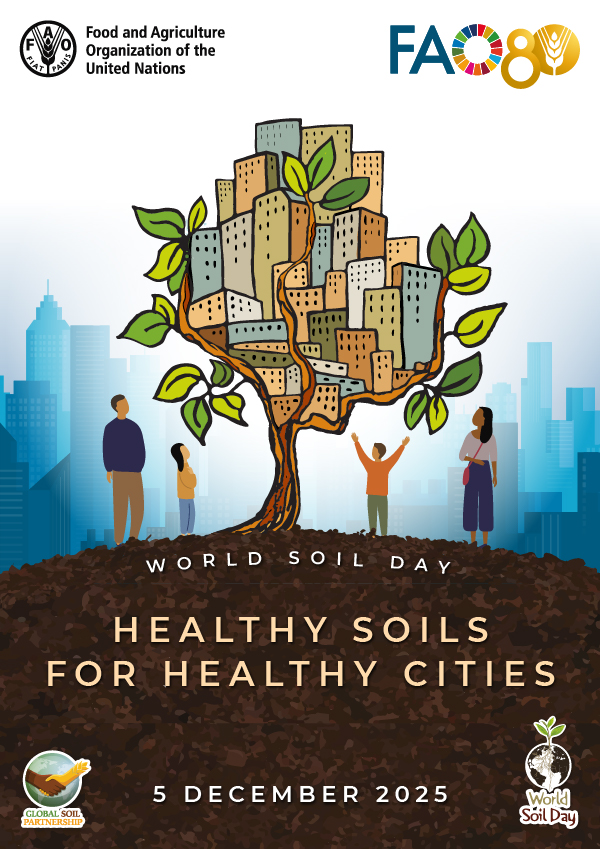
Every year on 5 December, the world pauses to honor one of our planet’s most precious yet commonly overlooked natural resources, soil. World Soil Day 2025, observed under the theme “Healthy Soils for Healthy Cities,” underscores the vital role soils play not only in rural landscapes but also within expanding urban environments across the Pacific. Healthy soils regulate water, filter pollutants, cool cities, store carbon, sustain green spaces, and safeguard public well-being. They form the unseen foundation of resilient communities.
From Farms to Cities to Islands, Soil Matters
Soil is much more than dirt beneath our feet. It is a living, breathing ecosystem that supports plant growth, regulates the water cycle, sustains biodiversity, and underpins both cultural and economic life across the Pacific. Across our islands and rural areas, healthy soils nourish staple crops, strengthen agroforestry systems, and support food security. In towns and villages, soils quietly sustain everyday life, from roadside vegetation and shade trees to homegardens, recreational spaces, drainage areas, and community parks.
Yet these soils are fragile. Decades of deforestation, poor land management practices, nutrient depletion, and intensifying climate impacts have eroded their health. Many soils have lost organic matter and water-holding capacity, while erosion, salinization, and declining soil carbon continue to reduce productivity. These changes threaten local diets, weaken livelihoods, and diminish the natural resilience of Pacific communities to climate extremes.
The Urgency for the Pacific Islands
Pacific Island Countries face unique and escalating pressures on their land and soils. Rising sea levels, saltwater intrusion, coastal erosion, unpredictable rainfall, and stronger storms are already affecting fragile coastal and inland soils. Human-driven pressures, including the expansion of agriculture into marginal lands, the clearing of vegetation, and limited awareness of soil conservation practices, contribute further to degradation.
Research across the region shows that soil erosion and nutrient loss are already compromising crop yields and undermining the sustainability of traditional farming systems. If these trends continue, the viability of culturally significant crops, such ast aro, yam, breadfruit, and bananas, may be placed at serious risk. For remote atolls and islands where imported food is costly and supply chains are fragile, deteriorating soils represent an urgent threat to food security and cultural continuity.
Healthy Soils for Healthy Cities: Relevance for Island Communities
Although the 2025 theme emphasizes urban areas, its message is profoundly relevant throughout the Pacific. Many island towns, though small by global standards, are rapidly expanding. As they grow, soils are increasingly sealed under concrete, fragmented by roads, compacted by construction activities, and deprived of natural vegetation. In many places, unplanned development destroys living soils long before their ecological value is recognized.
Yet healthy urban soils remain essential. They absorb rainfall and help reduce flooding, support home and community gardens, cool local environments, store carbon, filter pollutants, and sustain pockets of biodiversity amid development. Protecting urban soils is not only an environmental concern but also a core requirement for building safer, greener, and climate-ready island communities.
A Call to Action
World Soil Day 2025 must be more than a symbolic commemoration. It should inspire collective action across the region. Households can contribute by practicing composting, mulching, and regenerative gardening, while avoiding burning organic materials, so nutrients return to the soil. Farmers and traditional land managers can adopt soil conservation practices such as agroforestry, contour planting, and crop rotation, and restore degraded areas with organic amendments. Urban planners and local governments play an equally important role. By limiting unnecessary soil sealing, expanding green spaces, promoting permeable pavements, and incorporating soil health into zoning and development guidelines, they can help safeguard the ecological foundation of urban and peri-urban landscapes. Policymakers and national leaders must also prioritize soil health in climate adaptation, agriculture, and land-use planning, while investing in soil mapping, monitoring, and community education. Sustainable soil management is not optional, it is essential for long-term resilience.
A Shared Responsibility for the Future
Beneath every field, garden, village path, and city street lies the living foundation of our islands. Nature takes centuries to create healthy soil, yet poor management can destroy it in a single generation. As we observe World Soil Day 2025, let us renew our commitment to protect this irreplaceable resource. For our islands, for our children, and for our shared future, we must work together to build healthy soils for healthy cities, vibrant rural communities, and resilient island nations.
Soil is not expendable. It is indispensable.
